Maximizing San Diego ADU Potential for Wealth
The landscape of Southern California real estate is undergoing a fundamental transformation, and astute investors are recognizing the strategic advantages of Accessory Dwelling Units. For those looking to secure their financial future through strategic real estate investment, understanding and maximizing San Diego ADU potential has become an essential component of modern portfolio management. An Accessory Dwelling Unit, commonly referred to as a granny flat or companion unit, is a secondary housing structure situated on the same lot as a primary residence. By leveraging these structures, property owners can generate passive income, increase aggregate property value, and adapt to the evolving demands of the housing market. Our team at NewTown Real Estate partners with clients to navigate these regulatory shifts, ensuring that every property acquisition or modification serves a distinct, long-term financial objective.
Table of Contents
- Understanding San Diego ADU Potential
- The Financial Mechanics of ADUs
- Navigating Architectural Phases
- Exploring the Coastal Premium in La Jolla
- Family Appeal in Santee
- Comparing Regional Markets
- Strategic Market Positioning
- Frequently Asked Questions
Understanding San Diego ADU Potential
Recent legislative updates across California have systematically dismantled traditional barriers to high-density residential development. These structural changes significantly amplify San Diego ADU potential by streamlining the permitting process and relaxing stringent lot-size requirements. When we discuss zoning laws, which are municipal regulations dictating exactly how a specific parcel of land can be utilized or modified, we see a clear trend toward flexibility. The city has recognized the urgent need for supplementary housing, creating a highly favorable environment for property owners aiming to maximize their real estate equity.
In neighborhoods known for the architectural charm of North Park, we observe investors successfully integrating attached ADUs that respect historical aesthetics while providing modern utility. The integration of these units allows homeowners to leverage existing infrastructure efficiently. A well-executed ADU project not only serves as a standalone income generator but also fundamentally alters the market positioning of the primary asset. When assessing a prospective property, our team meticulously evaluates the lot dimensions, existing utility connections, and neighborhood precedents to determine the absolute highest and best use of the space.
The Financial Mechanics of ADUs
Treating a residence solely as a lifestyle upgrade completely overlooks the profound wealth-building mechanisms inherent in Southern California real estate. Constructing an ADU requires a comprehensive analysis of expected capitalization rates, which represent the anticipated rate of return on a real estate investment property based on the annual income it is expected to generate. By introducing a dedicated rental unit to a single-family parcel, owners effectively insulate themselves against macroeconomic volatility through diversified and stabilized income streams.
Furthermore, the addition of permitted square footage directly contributes to forced appreciation, a strategic process where an investor actively increases a property value through physical improvements rather than waiting for natural market inflation. As construction costs fluctuate, locking in development at current rates can yield substantial equity gains over the ensuing decade. During the transaction process, we often guide clients through complex escrow timelines, which are the strictly scheduled periods between an accepted offer and the final transfer of property ownership. By fully understanding these timelines, buyers can immediately initiate the architectural drafting and permitting phases upon closing, minimizing downtime and accelerating their return on investment.
Navigating Architectural Phases
The journey from conceptualization to breaking ground requires meticulous planning and a deep understanding of local bureaucratic frameworks. When entering the architectural phase, property owners must collaborate with seasoned design professionals who specialize in maximizing spatial utility within strict regulatory confines. During this critical period, understanding the nuances of a contingency clause becomes highly relevant for investors acquiring new property specifically for development. A contingency clause is a specific condition placed within a real estate contract that must be met before the sale can become legally binding. Savvy buyers often use feasibility contingencies to ensure the lot can legally accommodate an ADU before finalizing the purchase capital.
The permitting timeline itself requires strategic patience. While recent state legislation has mandated expedited review periods for ADU applications, local municipalities still enforce rigorous structural, electrical, and plumbing codes. Our team advises clients to anticipate these administrative timelines and factor holding costs into their initial financial projections. Holding costs encompass all expenses related to maintaining the property, such as taxes, insurance, and interest payments, during the non-income-producing development phase. By comprehensively mapping out these expenses, investors protect their expected profit margins and avoid severe capital shortfalls mid-project.
Exploring the Coastal Premium in La Jolla
The micro-markets within San Diego offer distinct pathways for ADU development. The coastal premium of La Jolla presents a unique investment landscape where high land values demand maximum spatial efficiency. In these affluent enclaves, even a modest conversion of a garage or a detached studio can command exceptional rental rates due to proximity to the ocean and elite amenities. The strategic addition of an ADU in such neighborhoods transforms a luxury asset into a performing financial instrument.
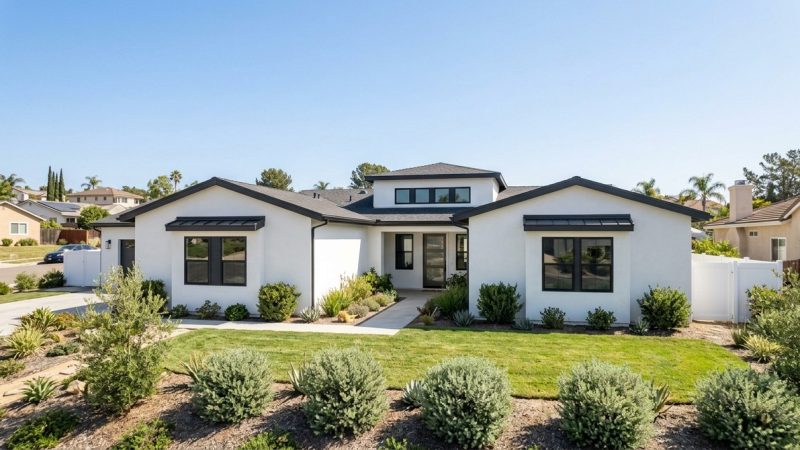
Investors exploring opportunities in these premier districts must navigate highly specific coastal commission guidelines. Our team provides the necessary oversight to ensure compliance while maximizing the usable footprint. For a clear example of the caliber of real estate that benefits from sophisticated market positioning, one might consider the investment profile of an asset like this exclusive La Jolla residence. Analyzing the surrounding comparable sales demonstrates how auxiliary dwelling structures command a significant premium upon resale, reinforcing the long-term wealth strategy we advocate for our clients.
Family Appeal in Santee
Moving inland, the investment calculus shifts to accommodate different demographic demands. The family appeal of Santee offers expansive lot sizes and a suburban topography that is remarkably conducive to detached Accessory Dwelling Units. Here, investors often encounter fewer spatial constraints, allowing for the construction of multi-bedroom ADUs that attract long-term, highly stable tenancy.
These larger parcels provide a canvas for multigenerational living arrangements or substantial rental enterprises. The lower initial acquisition cost relative to the coastal markets means that the yield on construction costs can be highly advantageous. We routinely analyze properties to determine their exact capacity for such development. To understand the suburban landscape and lot configurations typical of this area, reviewing a representative asset like this well-positioned Santee home provides valuable contextual insight. The strategic acquisition of such properties, followed by deliberate ADU expansion, represents a highly effective method for scaling a residential portfolio efficiently.
Comparing Regional Markets
While state mandates provide a baseline for ADU development across California, the specific execution and regulatory nuances differ markedly between San Diego and Los Angeles. Los Angeles presents a denser, highly segmented urban grid where ADUs often serve as critical infill housing. The permitting agencies in Los Angeles operate under different administrative timelines and local ordinances, which can influence the speed and total cost of development. Investors must carefully evaluate the implications of local rent stabilization ordinances, which are municipal laws that restrict the amount landlords can increase rent on existing tenants.
In contrast, San Diego offers a slightly more streamlined approach in specific jurisdictions, heavily incentivizing the creation of companion units through reduced development impact fees. These fees are local municipal charges assessed on new development projects to fund public infrastructure and services. By waiving or significantly reducing these costs, San Diego has actively encouraged property owners to participate in expanding the housing supply. Our team maintains a rigorous understanding of both regions, allowing us to advise clients who hold cross-market portfolios on exactly where to deploy capital for maximum financial efficiency.
Strategic Market Positioning
Successfully navigating the complexities of ADU development and broader real estate investment requires far more than standard transactional support. It demands a unified firm providing collaborative expertise, personalized marketing, and team-backed negotiation power. We approach every client relationship as a long-term partnership focused entirely on securing and expanding financial resources over decades.
Whether you are preparing to sell a property that already features a permitted ADU or seeking to acquire land with untapped development potential, accurate property valuations are critical. We synthesize macroeconomic trends, local zoning updates, and hyper-local buyer sentiment to position your asset perfectly within the market. For instance, evaluating the structural possibilities of a property such as this meticulously located San Diego home requires the depth of analysis our advisors bring to the table daily. Our commitment is to ensure that your real estate decisions are grounded in concrete market data and flawlessly aligned with comprehensive wealth-building strategies.
Frequently Asked Questions
What is the primary advantage of adding an ADU?
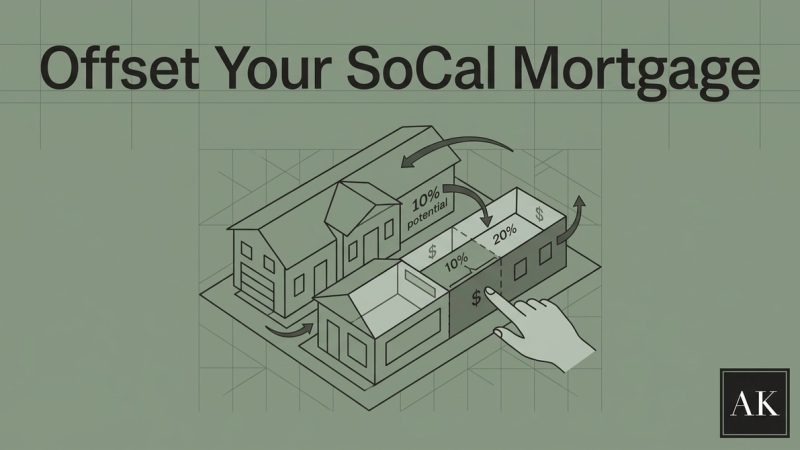
The primary advantage is the creation of a supplementary income stream combined with forced equity appreciation. By increasing the livable square footage, owners enhance the aggregate value of their asset while simultaneously generating monthly revenue to offset mortgage obligations and build long-term wealth.
How do local regulations impact ADU placement?
Regulations dictate setbacks, height limits, and lot coverage maximums. Setbacks are the mandatory distances a building must be located away from the property lines. Understanding these specific local municipal codes is absolutely essential before committing capital to architectural planning or engineering.
Does an ADU trigger a property tax reassessment?
Constructing an ADU will result in a blended property tax assessment. The existing primary residence typically retains its established tax base, while the new construction is assessed individually at its current market value. This specific structure prevents the entire property from being reassessed at a higher rate.
Can I finance ADU construction with existing equity?
Yes, many sophisticated investors utilize financial instruments such as a Home Equity Line of Credit or a cash-out refinance to fund development. A Home Equity Line of Credit is a revolving source of funds secured by the equity in your property, allowing you to draw capital specifically as construction milestones dictate.
To explore how these strategic investment concepts can be tailored to your specific financial goals, we invite you to schedule a portfolio review and discuss market positioning with our team.