Muirlands
La Jolla
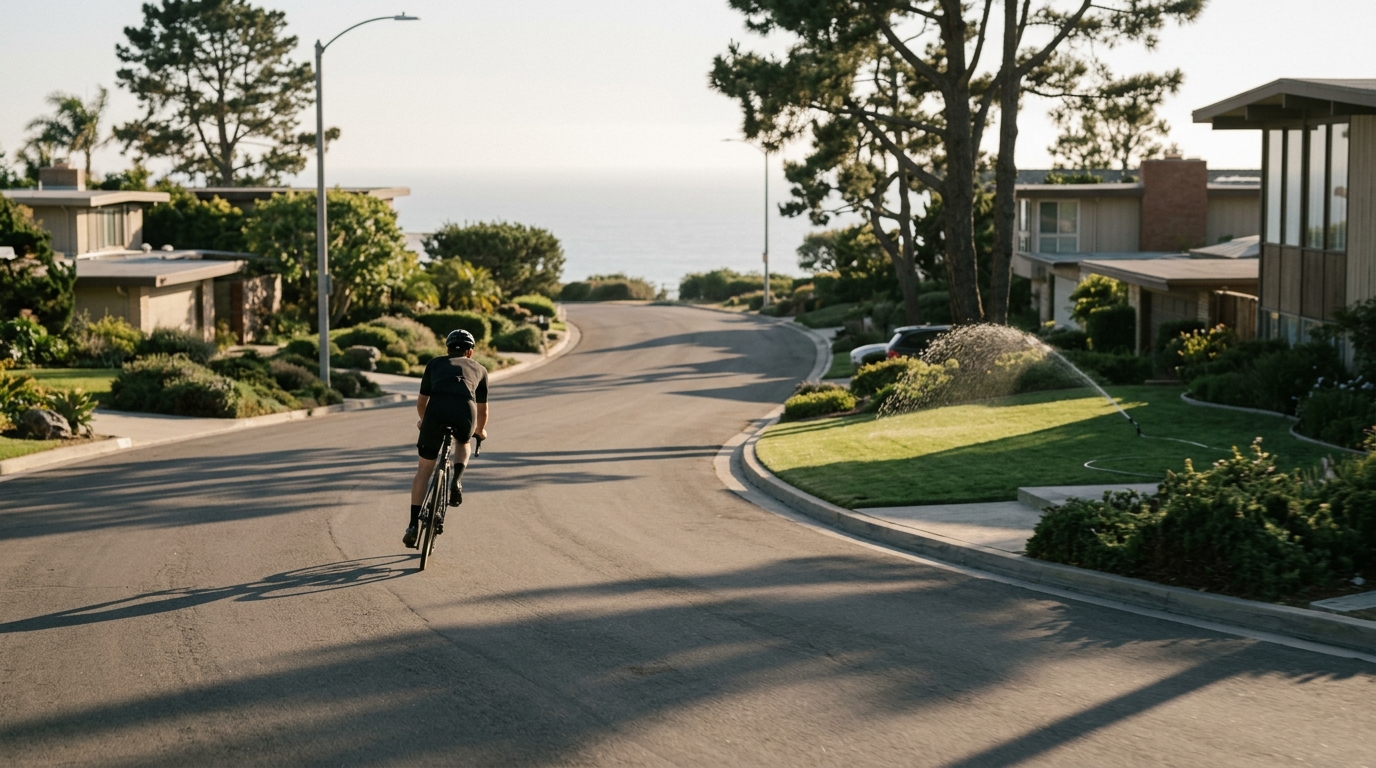
The Muirlands is the big-lot hillside neighborhood on the western slope of Mount Soledad, above the Village of La Jolla, with more than 1,000 homes strung along winding streets that follow the terrain instead of a grid. The trailing 12-month sale median ran about $4.1M as of mid-2026, with renovated mid-century ranches on the lower flatlands closer to $2.5M to $3M. This is where La Jolla buyers swap beach walkability for land and view.
About the Muirlands
The neighborhood is named for Harold Muir, who bought more than 250 acres on Mount Soledad in 1926 and laid out streets that curve with the hillside rather than cutting across it. His 1920s mansion, which locals call the Versailles of La Jolla, still stands. That original organic layout is why the Muirlands feels different from every other expensive neighborhood in San Diego: no through-grid, no commercial strip, mature trees, and lots that run up to 2.77 acres. You don’t pass through the Muirlands on the way to anywhere. That’s the product.
It’s really three neighborhoods under one name, and they price differently. Old Muirlands is the original 1920s core, with the estates and the biggest parcels. Muirlands Village, developed from the 1950s further down the hillside, carries California ranch homes on smaller lots and is the neighborhood’s realistic entry. Muirlands West, built mostly in the 1970s and 80s off Nautilus Street on the mountain’s western shoulder, has wider streets, larger lots, and ocean and city-light views. When a portal averages all three into one “Muirlands median,” it’s describing a neighborhood that doesn’t exist.
The swap you’re making is explicit. You give up the walk-to-coffee life. Errands mean a five-minute drive down Nautilus to the Village, and there’s no strolling to dinner. What you get back: privacy that’s rare anywhere on the coast, lots big enough to actually use, a 9-rated middle school inside the neighborhood, and views that stretch to the horizon on the right streets. Muirlands buyers have usually done their beach-neighborhood years already and know exactly why they’re moving uphill.
Who buys here: families anchoring on the school triangle, remodelers who want a mid-century ranch with good bones and a big view lot, and buyers stepping up from Bird Rock or the Village who ran out of land before they ran out of budget.
Muirlands real estate market
As of mid-2026:
| Metric | Figure |
|---|---|
| Median sale price, trailing 12 months | about $4.1M (up about 1% year over year) |
| Realistic full range | roughly $2M to $18M |
| Renovated mid-century ranches, lower flatlands | about $2.5M to $3M |
| Days on market | about 48 on average |
| Homes in the neighborhood | more than 1,000 |
Two readings. First, that $4.1M median sits on modest sales volume spread across three very different sub-areas, so your street matters more than the headline. A Muirlands Village ranch and an Old Muirlands estate are different houses that happen to share a mailing area. I comp by sub-area, view tier, and lot utility, and I’d rather show you nine relevant sales than one blended median. If you’re trying to figure out what a specific house is honestly worth, my home valuation guide explains how I build that number.
Second, the flat 1 percent year-over-year change tells you this market has matured out of its frenzy. Buyers at $4M take their time, and sellers who price to 2024 memories sit. Homes priced to the last 90 days of their own sub-area still sell inside a few weeks. The spread between those two outcomes is the most expensive decision a Muirlands seller makes.
The housing stock
Mid-century ranches. The 1950s and 60s filled the lower hillside with single-story California ranches, many on view lots their builders undervalued. Original-condition examples are the neighborhood’s opportunity: good bones, dated systems, and a lot that justifies the work. These draw both families and remodelers, and the estate-sale listings go fast.
Custom and estate homes. From Muir-era originals to 1980s customs to new builds, the upper streets are one-off houses on one-off lots. Comps get thin and appraisals get interesting. This is where an agent who can read construction quality instead of finish level earns the fee.
Muirlands West tract homes. The 1970s and 80s homes off Nautilus offer the neighborhood’s most predictable product: known floor plans, wider streets, and reliable view orientation. Less romance, easier diligence.
What I check on every Muirlands purchase, in order. Slope and soils first: this is a hillside on the flank of Mount Soledad, and any home on or below a cut slope gets a geotechnical read, retaining-wall review, and drainage history before we remove contingencies. Second, remodel feasibility: coastal-zone permitting is slow, hillside permitting is slower, and a dated house that needs both deserves a bigger discount than most buyers price in. Third, the view itself: a view you’re paying seven figures for should be checked against what neighbors downhill can legally build, because view protection here comes from topography and setbacks, not from any guarantee. I walk the lot lines and pull what’s on file before you fall in love.
Schools serving the Muirlands
The school triangle is a headline reason families pick this hillside. GreatSchools ratings as of 2026:
- Muirlands Middle rates a 9 and sits inside the neighborhood itself, on Nautilus Street.
- La Jolla High rates a 9, just down the hill.
- La Jolla Elementary and Bird Rock Elementary each rate a 9 and serve different parts of the hillside; assignment is address-specific.
Having the middle school in the neighborhood matters more than it sounds: a chunk of the Muirlands can walk or bike to campus, downhill in the morning at least. I verify the exact feeder pattern on any home before a family counts on it.
Amenities and lifestyle
- Muirlands Middle School: the neighborhood’s own campus, and the anchor of its family demand.
- The Village: five minutes down Nautilus for groceries, Warwick’s, Harry’s Coffee Shop, and every restaurant on Prospect.
- Windansea Beach: the closest sand, a short drive or a committed walk down the hill. The sunset ritual for half the neighborhood.
- Mt. Soledad National Veterans Memorial: up the hill at the summit, with the 360-degree view that explains every price on this page.
- Nautilus Street: the neighborhood’s spine, connecting the hillside to the Village, the high school, and the beach in one line.
- The trails and fire roads of Mount Soledad’s open slopes: informal, unglamorous, and used daily by the dog-walking half of the population.
No commercial strip, no HOA on most of the single-family streets, no through traffic. People who need more action live somewhere else, usually earlier in their lives.
How I run a Muirlands purchase
At this price band my job is mostly disciplined skepticism. We start with the sub-area and the view tier you’re actually buying, and set the number before the tour. I pull permit history and any geotechnical or retaining-wall records the day a listing hits, because hillside surprises found in escrow cost you negotiating room you had for free a week earlier. On mid-century originals, my construction read separates the $300K remodel from the $1.5M one, and that difference decides whether the list price is a deal or a trap. On custom homes with no clean comps, I build the valuation from land, view tier, and replacement cost, and I show you the work. And when a seller anchors to the neighbor’s $6M sale on a double lot, we respond with a comp sheet, not a sigh. My clients’ reviews say the same thing over and over: he showed the downside first. Here, that habit is worth six figures.
Why buyers choose the Muirlands
It’s the most land, privacy, and view per dollar in 92037, with a 9-rated middle school inside the neighborhood and the Village five minutes downhill. You give up walkability and accept hillside diligence as the cost of entry. Buyers who want the surf and the cottage streets should compare Windansea below; buyers chasing maximum view per dollar across a wider price band should look over the ridge at Mount Soledad.
Frequently asked questions
How much does a home cost in the Muirlands? The trailing 12-month median ran about $4.1M as of mid-2026, up about 1% year over year. The realistic range runs from about $2M to $18M, with renovated mid-century ranches on the lower flatlands around $2.5M to $3M.
What are the different parts of the Muirlands? Three sub-areas: Old Muirlands, the original 1920s estate core laid out by Harold Muir; Muirlands Village, the 1950s ranch section lower on the hillside and the neighborhood’s entry price point; and Muirlands West, 1970s and 80s homes with larger lots off Nautilus Street.
Is the Muirlands walkable? No, and it doesn’t pretend to be. There’s no commercial strip; errands and dinner mean a five-minute drive down Nautilus to the Village. Many families can walk or bike to Muirlands Middle, and that’s the walk that sells houses here.
What should I watch out for when buying in the Muirlands? Hillside issues first: slope stability, retaining walls, and drainage all deserve a geotechnical read. Then remodel feasibility, since coastal and hillside permitting is slow and expensive. Then the durability of your view, which is protected by topography, not by law.
Is the Muirlands a good place for families? One of the strongest family setups in La Jolla. Muirlands Middle rates a 9 and sits inside the neighborhood, La Jolla High rates a 9 down the hill, lots are big enough for real yards, and the streets carry no through traffic.
Find your home in the Muirlands
Tell me your budget and which sub-area fits your life, and I’ll send you every Muirlands listing worth your time, with permit history, my remodel-cost read, and an honest view assessment on each. Call or text (619) 568-2649 or send a message. Back to the full La Jolla guide, or compare with Windansea below the hill and Mount Soledad above it.