Building Wealth with California Real Estate Investing
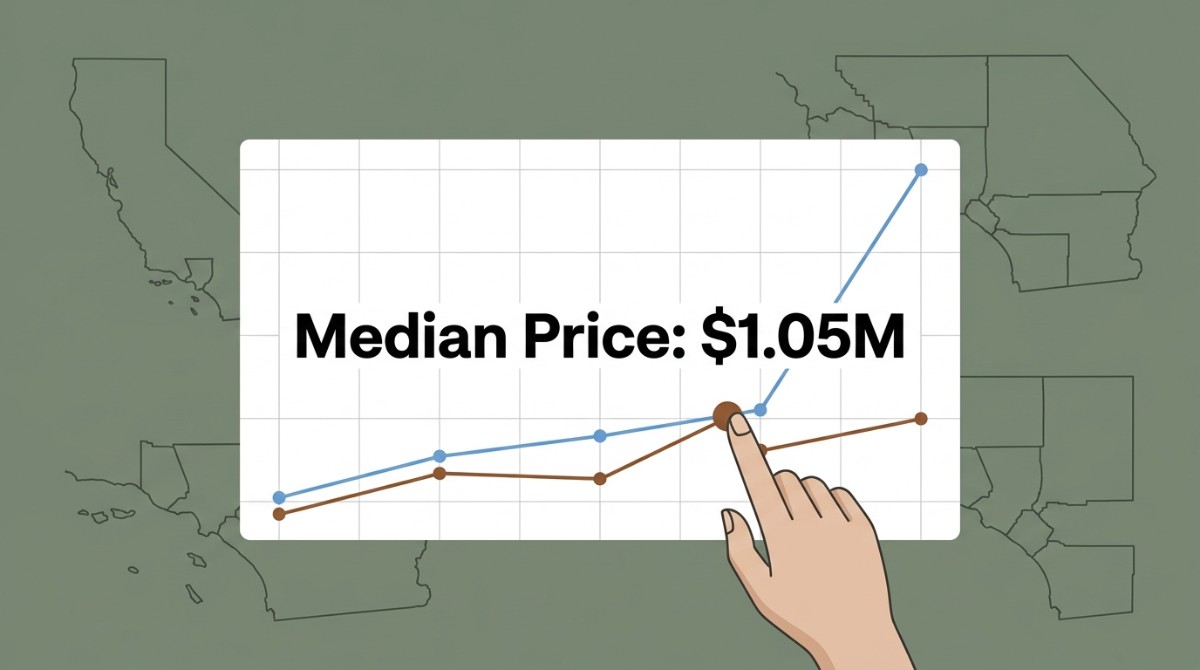
As we review the housing data for July 2026, the strategy for California real estate investing requires a careful look at the numbers rather than relying on broad speculation. In San Diego County, the median price for a detached home currently sits near $1,050,000, while the overall market holds roughly 2.8 months of supply. This indicates a seller-leaning environment that still offers distinct opportunities for buyers who understand the data. I am Adam King, and my objective is to break down these local market metrics into clear, honest insight that you can actually use. Through Adam King Real Estate Strategies, we will explore how specific investment methods perform across the distinct micro-markets of Southern California. The right approach requires moving beyond simple assumptions and digging deep into the actual economic drivers shaping our neighborhoods.
Macro Trends in California Real Estate Investing
To accurately evaluate California real estate investing, we must first examine the absorption rate, which is the rate at which available homes are sold in a specific market during a given time period. Right now, San Diego shows an absorption rate that generally favors sellers, with average days on market hovering around 24 days for well-priced single-family homes. However, treating the entire region as one monolithic market is a mistake. The data shows significant variance when we compare coastal properties to inland developments. Investors often ask how to navigate this environment. The answer lies in identifying pockets of value based on hard metrics rather than general sentiment.
We track inventory, which simply means the total number of homes available for sale in a specific area at any given moment. When inventory drops below three months of supply, prices tend to stabilize or rise due to scarcity. Currently, we are seeing fluctuating inventory levels depending on the exact neighborhood and property type. Understanding this dynamic is the foundational step in portfolio diversification. By observing these trends closely, we can pinpoint exactly where capital is best deployed for maximum long-term stability.
Buy-and-Hold Strategies in San Diego
A classic buy-and-hold approach remains a staple for those looking to build generational wealth. This strategy involves purchasing a property to rent out over a long period, allowing the owner to benefit from both monthly cash flow and gradual property appreciation. In the San Diego area, the approach requires careful neighborhood selection. Consider the detached housing market in La Jolla. Here, we see a highly constrained market with very low turnover. The entry price is substantial, but the historical appreciation rate provides a strong anchor for a diversified portfolio. The localized scarcity of land ensures that these assets hold their value remarkably well.
On the other hand, markets like Santee offer a different mathematical profile. Santee has seen steady suburban growth, and the median purchase price is more accessible for new investors. The rent-to-price ratio in Santee often yields a more immediate return on investment compared to the premium coastal zip codes. When evaluating a buy-and-hold property, I always look at the historical days on market for rentals in that specific zip code. If a neighborhood has a high vacancy rate, the projected annual returns will suffer. Right now, the demand for single-family rentals in San Diego remains robust, driven by a growing local workforce and limited new construction.
Condominium Investments in Urban Centers
While detached homes often dominate the residential conversation, the condominium market requires its own specific analysis. Condos present a lower barrier to entry in dense urban centers, making them an attractive option for investors looking to scale their portfolios quickly. In neighborhoods like Downtown San Diego or West Hollywood, the condo market operates on a completely different cycle than the detached market. We must factor in homeowners association fees, which can heavily impact the monthly cash flow. A thorough evaluation of these monthly carrying costs is essential for accurate forecasting.
When analyzing condo investments, I advise clients to review the reserve studies of the buildings they are considering. A poorly managed building will eventually issue special assessments, effectively wiping out a year of rental profit. However, well-managed condo buildings in areas like Marina Del Rey or Pacific Palisades offer incredibly stable tenant pools. The key is to run the financial models conservatively, ensuring that the rental income comfortably covers the mortgage, property taxes, and all association dues.
The Multifamily Acquisition Market
Transitioning from single-family homes to multifamily properties shifts the economic focus heavily toward income generation. Multifamily acquisitions involve purchasing properties with two or more units, such as duplexes or larger apartment complexes. When we analyze these assets, the capitalization rate (cap rate) becomes the primary metric, which is calculated by dividing the net operating income of a property by its current market value. A higher cap rate generally indicates a higher initial return, though it may come with increased management responsibilities.
In neighborhoods like North Park, we are currently observing softer demand for condos and smaller multifamily units. This softness translates to slightly higher days on market, recently touching 35 days on average for attached properties. For an investor, this softer demand can present an opening. Sellers of multifamily units in North Park may be more willing to negotiate on price or terms, thereby improving the buyer’s cap rate. Conversely, areas like Coronado present a much tighter multifamily environment. The barrier to entry in Coronado is steep, and cap rates are generally lower due to the high property values. Choosing between a North Park duplex and a Coronado complex depends entirely on your specific timeline and risk tolerance.
Utilizing 1031 Exchanges for Growth
Another vital mechanism for expanding your portfolio is the 1031 exchange. This portion of the tax code allows an investor to defer capital gains taxes when they sell an investment property and reinvest the proceeds into a new property of equal or greater value. For investors holding properties in highly appreciated markets like Santa Monica or Beverly Hills, a 1031 exchange offers a powerful way to transition equity into higher-yielding markets without a massive immediate tax burden.
The NewTown Real Estate team frequently assists clients in navigating the strict timelines associated with these exchanges. You have exactly 45 days to identify a replacement property and 180 days to close the transaction. In a tight inventory market, this timeline requires precision and foresight. We often look toward areas like Rancho Bernardo or Culver City as excellent landing spots for exchange funds, as these sub-markets offer a blend of stable appreciation and reliable tenant demand. Proper planning ensures that the tax benefits are fully realized.
Diversification Across Micro-Markets
True resilience in an investment portfolio comes from geographic and asset-class diversification. Relying entirely on one neighborhood or one type of property exposes an investor to localized economic shifts. Balancing a high-appreciation coastal asset with high-cash-flow inland properties creates a much more stable return profile. Rancho Bernardo offers solid corporate employment bases and steady tenant demand, which smooths out the potential volatility of the luxury coastal market.
By diversifying across these micro-markets, you protect your capital from isolated zoning changes or localized supply gluts. The market dynamics in Venice differ wildly from those in Santee. Furthermore, the financing environment plays a critical role in these acquisitions. We frequently advise clients on utilizing rate buydowns, a financing tool where the buyer or seller pays an upfront fee to the lender in order to reduce the interest rate on the mortgage for the first few years. In the current interest rate environment, a strategic rate buydown can significantly improve the early cash flow of a multifamily property.
Managing Risk in Real Estate Portfolios
Risk management is an often overlooked aspect of property investment. Many new buyers focus entirely on the potential upside without preparing for inevitable market shifts or unexpected expenses. One of the best ways to mitigate risk is to maintain ample cash reserves for each property in your portfolio. I generally recommend setting aside three to six months of operating expenses, depending on the age and condition of the building. This buffer protects you from forced sales during temporary economic downturns.
Additionally, proactive property management plays a crucial role in risk reduction. Deferred maintenance will compound over time, leading to massive capital expenditures down the road. By addressing minor repairs promptly and maintaining positive relationships with tenants, you significantly reduce turnover rates. High tenant retention is one of the most effective strategies for maximizing your long-term return on investment. The cost of acquiring a new tenant, including vacancy periods and marketing expenses, far outweighs the cost of keeping a good tenant satisfied. We help our clients build networks of reliable contractors and property managers across San Diego, Torrance, Hermosa Beach, and Redondo Beach to ensure their assets are well protected.
Economic Indicators and Future Projections
As we look ahead, the underlying economic indicators for Southern California remain stable. Employment in the technology and life sciences sectors continues to drive steady migration into the region. This influx of high-earning professionals directly supports the rental market, particularly in areas like Rancho Bernardo, Playa Del Rey, and the broader coastal corridors. A strong labor market is the bedrock of any successful real estate investment strategy.
However, investors must remain vigilant about carrying costs. Property taxes, insurance premiums, and maintenance expenses have all seen incremental increases over the past two years. When I build a financial model for a client, we stress-test these variables. We assume a conservative annual increase in operating expenses to ensure the property will still cash flow even if local economic conditions soften. This data-driven conservatism is what separates a successful long-term investment from a short-sighted purchase. We want our clients to hold assets that can weather any phase of the economic cycle.
Partnering with Our Real Estate Team
Real estate investing is not a solitary endeavor. It requires a team of professionals who understand the granular details of the local market. As part of the NewTown Real Estate team, I focus on providing buyers, sellers, and investors with the exact data they need to make informed decisions. We do not rely on aggressive pitches or empty promises. Instead, we offer steady negotiation, accurate pricing models, and personalized marketing to help you achieve your goals.
Whether you are acquiring your first duplex in North Park or expanding a large portfolio across Los Angeles, Santa Monica, and San Diego, having a knowledgeable partner is crucial. Applying a generic strategy to such a diverse region will inevitably lead to suboptimal returns. We track the absorption rates, monitor the shifting inventory levels, and negotiate the terms that make deals viable in today’s climate. I invite you to review our comprehensive market reports and see how our data-driven approach can support your financial goals. You can explore our resources and learn more about our services directly at the Adam King Real Estate Strategies website. By anchoring your decisions in concrete numbers, you can navigate the market with absolute confidence.